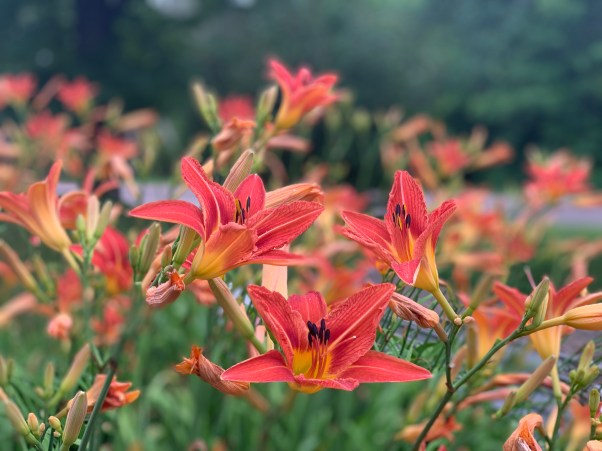
Watching the perennials return with vibrancy and luster is akin to talking to your oldest friend; you are simply made gladder by the occasion. Every July this bed of daylily fulfills every grand expectation I have as we rejoice in shades of orange and yellow. Sipping our morning tea on the porch we are captivated by the sway of the tall stems and the eastern light dancing on star-shaped petals knowing the thick cluster a perfect hideout for any number of critters. These much anticipated yet ordinary flowery bursts are nothing but masterpieces of shape and color, without fail on repeat. Flowers gone wild once more.
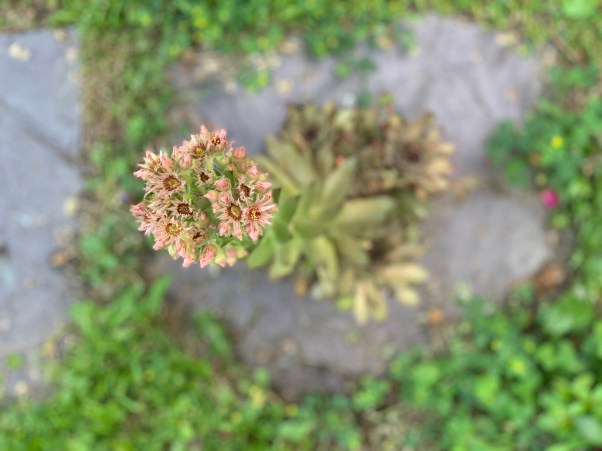
Newbies are in our garden too, like this tall bloom from the succulent I have yet to plant. We seemed to always have a few hens & chicks stuffed into a pot here or there but this one shot straight up to blossom into the tiniest of desert delights before I could say boo. We were still trying to decide where to plant it and it is showtime already.
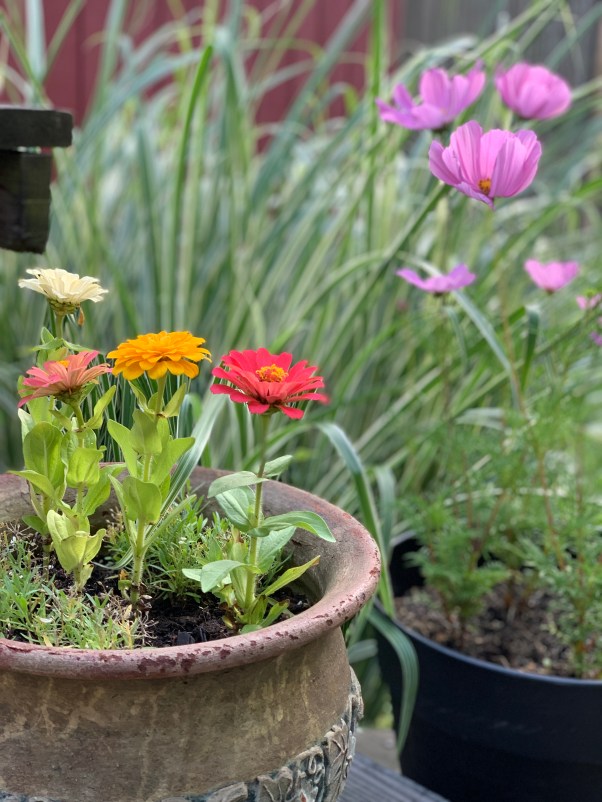
This summer we surrounded our every outdoor space with more pots and fill them with whatever might bloom continually. I don’t often care about names or species, as long as the plants attract butterflies and bees and keep flowering into late August. Opens the horizons to so many possible delights, another bonus during this summer of, well possibilities. Can you believe what we all endured last summer? My PTSD has quelled to an occasional flare, but I can still make it out, like a snake in the grass, always on the ready. Counting on Americans to care for others is my constant worry, an untouchable goal in certain regions, those places where citizens decry the sanity of vaccines or mask wearing to gild their false god of independence. This is where I go into hysterics. But flowers guide me back to dirt. To the tomatoes and lettuce and peas and the rest growing in our yard. I remember the elders as I dig. Those who sacrificed. They remind me to seek out the truths blurred by all the noise and distractions. Pink buds help too.

Geraniums and I go way back. I discovered that they don’t need much from me, and that is always a relief. Summer weather in Vermont is not the place for a diva, at least not a potted one. I have my hands full with the hanging fuchsia: another must have. Fuchsias need watering and talking too, yes, all worth the time since they bring hummingbirds like clockwork. But geraniums will too, without any fuss. Some years I have luck wintering them over, but that requires more sunlight than my current home has, so for now, I am just delighted they are doing their thing over there in the corner of our porch, not asking for anything special either. Don’t ever diss a geranium in front of me. They are queens.

Annuals always have a place in my garden beds or in any of the pots scattered about our space. Zinnias and Cosmos bordered by tall grasses shield our back deck. Afternoons into evening you will find us out listening to bird song and monitoring the setting sun gazing at these lovely ones. Singular and complex they invite contemplation. Give hope.
Roadside delights line every roadside in my neighborhood. One must be grateful for these hardy little joys, growing here for only our strolling pleasure. Lacy little heads bobbing as we pass. They wave a hello as the UPS truck barrels up. Now that’s a flower to shout about, don’t you think? I wonder if Queen Anne knew she’d be so graced?

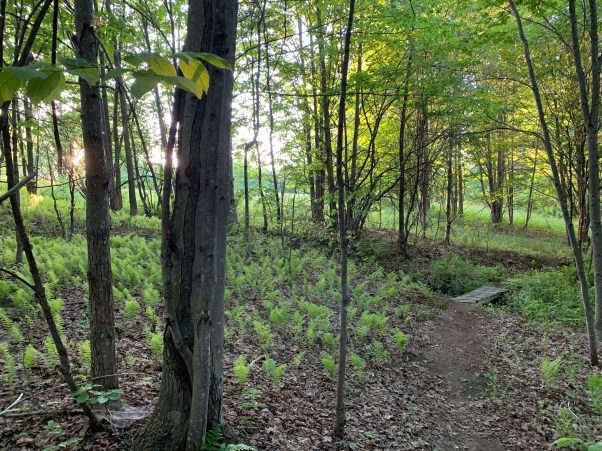
I don’t mind cutting through this open field of ferns and grasses and flowers via the mowed path taking me through to the forest ahead. This land was recently sold, and we all know in the next year or so a house will be here, but for now, it’s still a treasured privilege to walk freely across the land. Vermont became a desired haven since COVID, everything was bought by someone from states away, which will change the landscape in our future. But for now, this is still my place to roam and forget the crazy beyond our state line. Forget those with anger and animosity. Those who feel like something was stolen or that she should still be locked up or that the big lie didn’t lead to an insurrection in our Capital. I have cried on this path more nights than not over this crap. Tonight I try to just skip along and spot the hawk above me. Mostly I hope not to meet the bear again.
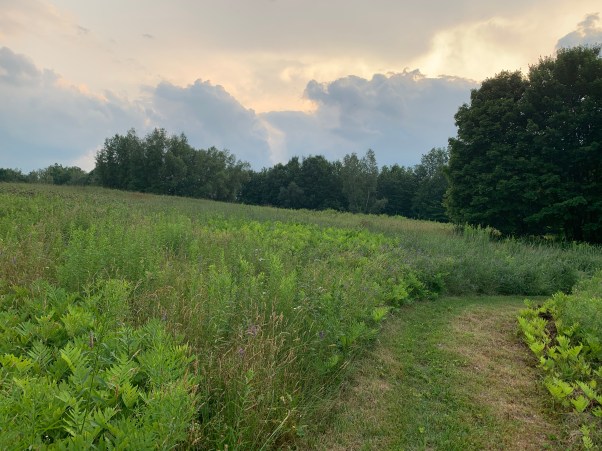
Storms are rolling in with some speed, so my meandering will have to quicken for now, but all the wild daisies are a lingering delight I will return to see tomorrow.

Yeah, flowers are certainly worth a discussion, so I’ll continuing to do just that with you.

 Nine Cent Girl