Motherhood places a myriad of demands and emotions blended with falsehoods and truths onto any woman undertaking the role. There is plenty to say about the job but nothing that can be taken as an absolute. Some women take to it naturally, much like Adèle Ratignolle in Kate Chopin’s shocking novel, The Awakening, which explores the absolute imprisonment of her central character, Edna Pontellier. Imprisoned by society’s expectations of mothers and wives, the limiting duties and beliefs of both. Edna chose death instead. Shocking even today as I write those words. But Chopin knew first hand the laborious demands of the job and gave her protagonist an out, a provocative out but the only one that worked for Edna. My own mother had little time to discover how she might want to be as a singular person. Married within two weeks of graduating college and holding her first infant nine months later. Baby after baby after baby occupied her life until her mid-thirties. Despite her boundless energy, her love of people and her natural ability to caretake, this was a arduous routine, and an overwhelming expectation which yoked generations of women, and even her I imagine with six of us making our demands. As women do, she networked, fought to survive, leaned heavily on unmarried sisters or young women willing to do what they must until they entered their own married life. But you’d be fool to think there was choice in their endless mothering. Choice wasn’t in their vocabulary. 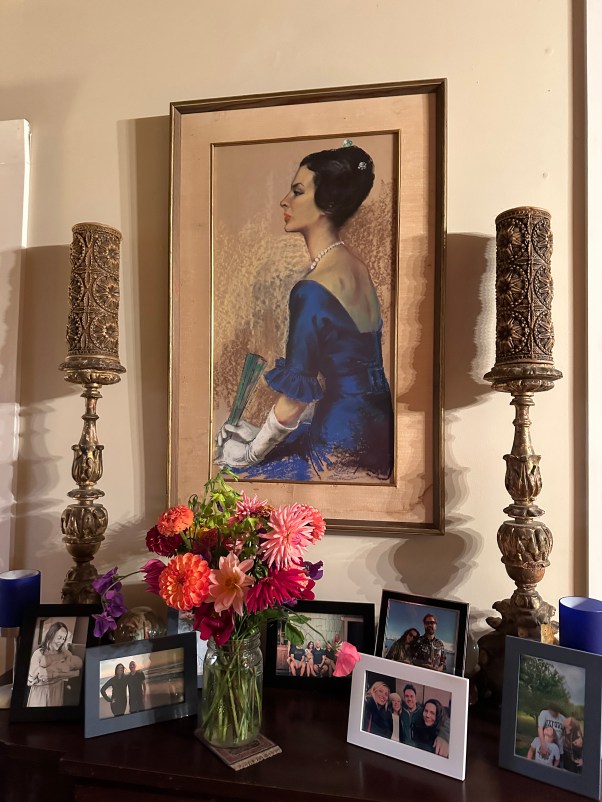
Author Archives: Nine Cent Girl
Novels, lakes and bikes
The return to school is a steep climb, but thankfully is one that I have learned to traverse with more surety through the years. Still, the ascent is formative. The piles of novels an English teacher needs to have at her disposal is a big one, and in most cases, there are often several piles due to teaching several courses. Most are, of course, old favorites by this point in my career, but I read them again. Rereading, I love how lines hit me anew. How different images stand for something I just lived through. How the makeup of the class veers into a whole new vein of thought than previously.
Books were very important to my father, and I was reminded of that this week when my brother sent me a list of titles my father recommended to him. I recalled most of the list he handed me. Anything by Jane Austen, he wrote. Both Emily and Charlotte Bronte he insisted. Everything Dickens. He adored George Eliot and reminded me that was a pseudonym for Mary Ann Evans. You must read the Russians, start with Tolstoy. And yes, of course Flaubert’s Madame Bovary. He included Sigrid Undset’s epic work Kristin Lavransdatter. I read everything while pregnant and nursing, which lasted seemingly for a decade. These days I nudge my students up the same laborious hill of classics, offering historic context with all the excitement I can muster. Making readers these days is more formidable than summiting Everest but perhaps equally rewarding to those who make it there.

Unforced errors, a heatwave and a pie
There has been tennis, tennis and more tennis happening in my house this week. Tennis watching on the tele that is, well, it is the US Open after all, with a bevy of excellent players from the US crafting some stunning matches, 25 citizens competing this year. To be fair, there are players representing dozens of countries, coming together here as friendly competitors despite politics or national differences. Watching these young athletes is pure joy and absolutely inspiring, yet I found myself ruminating over the term “unforced error.” Commentators throw out the term with no thought over its brutal implication. The error is yours. You should have made the shot, but you didn’t. You are the only cause of your losing game. Brutal, right?

 Nine Cent Girl