Last Saturday I attended the Inaugural Laguna Beach Literary Festival, and I’m so glad I did, because the whole experience strengthened my resolve to be a better Literary Citizen. Simply put, that’s a person who reads. Like me. Like you, as you are reading this. Of course I also happen to be a person who writes, but that’s a side note to my conviction to read widely, to buy books, to pop into my local bookstore and ask for their favorites, basically to consider the rich nuances of humanity through novels and non-fiction alike. Reading to view our present dilemmas against the atrocities of the past. To acknowledge flaws in beliefs that were once so solid. Reading to better understand those who I can’t and reading to find solidarity. Reading generates questions like why is it that authoritarian regimes burn books? Why is educational funding cut before anything else? Why is everyone ingesting their information and imagination via visuals like TikTok and YouTube? Whose interest is being served by this shift away from print? Why is maintaining literary citizenship a threat to governments who don’t respect your ideas, your past, your rights, your very existence? By reading you know exactly why.
As readers we can remember when Raskolnikov justifies his ideas about murder to Sonia. He wants to be daring, he admits, and not be “a trembling creature” who didn’t have the nerve to take an ax to the pawn broker and her sister, and so he does just that, committing a heinous double murder. One wonders if ICE agent, Jonathan Ross, will suffer for his immoral use unwarranted deadly force when he shot an unarmed American citizen, Renee Nicole Good, through her windshield and straight into her face. Dostoevsky’s 1866 novel brings us into the inner workings of such a transgression, one that anyone with a soul must wrestle with, regardless of what our feckless VP might voice about absolute immunity. Dostoevsky takes a dive into the darkness that only someone who has taken a life might feel, and we journey with him, as fearful and chaotic as it is; yet once his fevered mind loosened its grip, a new story formed, “the story of the gradual renewal of a man, the story of his gradual regeneration, of his passing from one world into another, of his initiation into a new unknown life,” (Dostoevsky, Crime and Punishment). Raskolnikov breaks over his arrogance but eventually admits his own shattered relationship with humanity and moves to a life where through suffering he might find redemption. How can we not all learn from this story? Probably this should be required reading for Trump’s new army who will most certainly carry shame and guilt for their sins against their countrymen.
And what of the audacity of Shakespeare’s Macbeth? Might not everyone in political positions or those wielding authority in any capacity discover something useful from this tale of unchecked ambition? Starting with Macbeth’s false road to the crown, and his every deceitful move afterwards, the whole play is a warning about seizing power. Of course, even this despot realizes, “I am in blood / Stepped in so far, that, should I wade no more, / Returning were as tedious as go o’er.” Still, he continues his raging insanity. It is not until his own wife kills herself that we hear a sliver of something akin to regret, “Out, out, brief candle./Life’s but a walking shadow, a poor player/That struts and frets his hour upon the stage,/And then is heard no more. It is a tale/Told by an idiot, full of sound and fury,/Signifying nothing.” How about we mandate a close-read of everything Shakespeare to every perspective politician? In this play we watch the pitfalls of a career bent on greed and power, on revenge and retribution, which leads to destruction like the chaos we are witnessing around the globe today by those controlling governments.
There are estimated to be 2 to 4 million books published or self-published daily. I am no authority but wow, that is extraordinary. People are writing. Your neighbor. Mine. Your former student or teacher. Maybe a few are AI generated, but let’s assume there are hundreds of thousands of books that took decades to research and wordsmith, to imagine and bring together, visions that demanded time and thought and effort. We have so much to learn from words, especially when strung together to impart such wisdom. Can we even get to the roots of our own cultural racism without Ellison’s Invisible Man? Every line is worth plucking out. Just randomly opening the novel, I stumble onto “white folks seemed always to expect you to know those things which they’d done everything they could think of to prevent you from knowing.” Rich words to ponder. Feel. Acknowledge. Moving you forward with a broader awareness of our systematic and damaging biases.
In Virginia Woolf’s To the Lighthouse, Mr. Ramsey spends the first part of the novel pondering Lord Tennyson’s poem, The Charge of the Light Brigade. He repeats the phrase, over and over, “Some one has blundered.” Take it any way you wish. It pertains to all of us. At just about every turn we have all made a failure of life. And yet, we must go on. Pay the butcher. Attend to our children. Make small talk at dinner and find our purpose in life. Woolf is both lofty and mundane in her novel by the sea, with images of the lighthouse signifying everyone’s ultimate goal. Getting there is not easy. Some don’t. Some do.
What are the novels you return to? What books do you run to when you feel grief or sorrow or need to laugh? Being a Literary Citizen asks us to support our local library, and our public school system, while also directing us to be active in our communities. Ask your neighbors what they need, and lend a hand. Vote from an informed position, which infers that you read politicians’ records and learn about their positions on a variety of issues. Go ahead and ask them what they are reading. What they could not put down even when their eyes were closing. Ask what books anger them, and why.
Maris Kreizman writes that “Literary citizenship is a collaborative process” and I could not agree more. Let me know how my words made you feel or think. Let me know what you are writing or reading. I’d love to connect with you.
 Nine Cent Girl
Rereading–really re-viewing–“A Year of Mornings” which is photos from two woman, one of whom lives in Portland OR, the other in Portland ME. It is a beautiful little book.
And then Pat Conroy. His writing makes me cry but there is such beauty in his words.
Photos, words, beauty, tears…my idea of a good read.
LikeLiked by 1 person
Thanks for sharing— I will check both out! And thanks for reading!!
LikeLiked by 1 person
Yes, if only people would read and know the world more. Critical thinking is rare. Your mention of some great books is spot on.
LikeLiked by 1 person
Thanks for being a reader!!
LikeLiked by 1 person
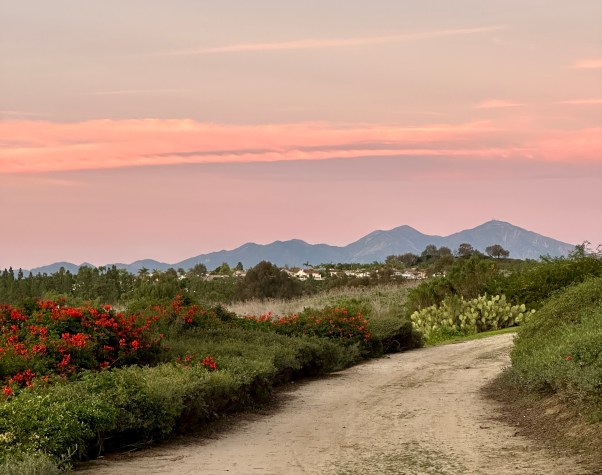
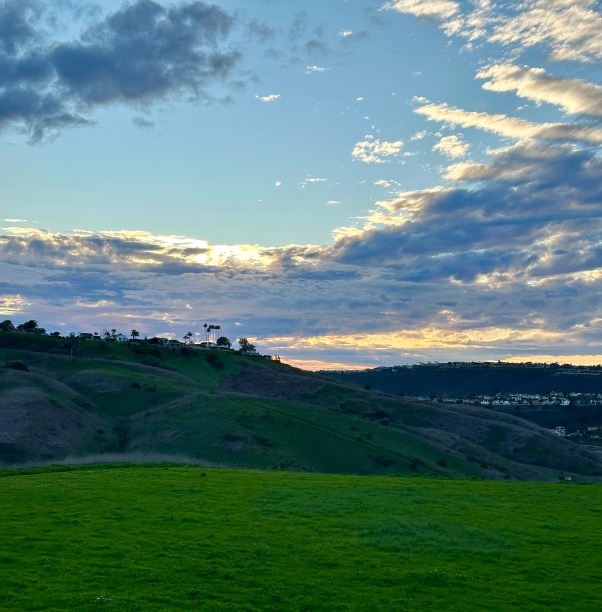
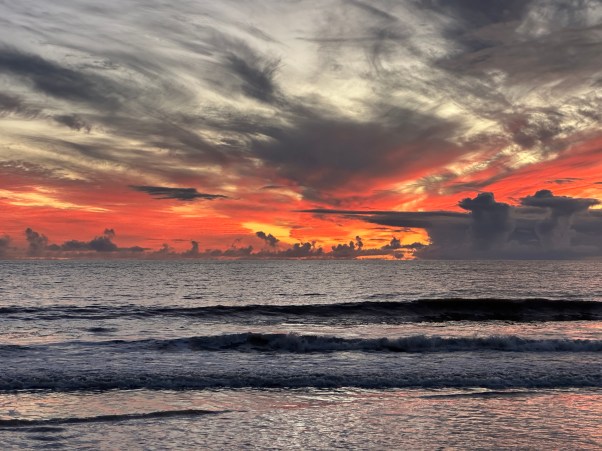
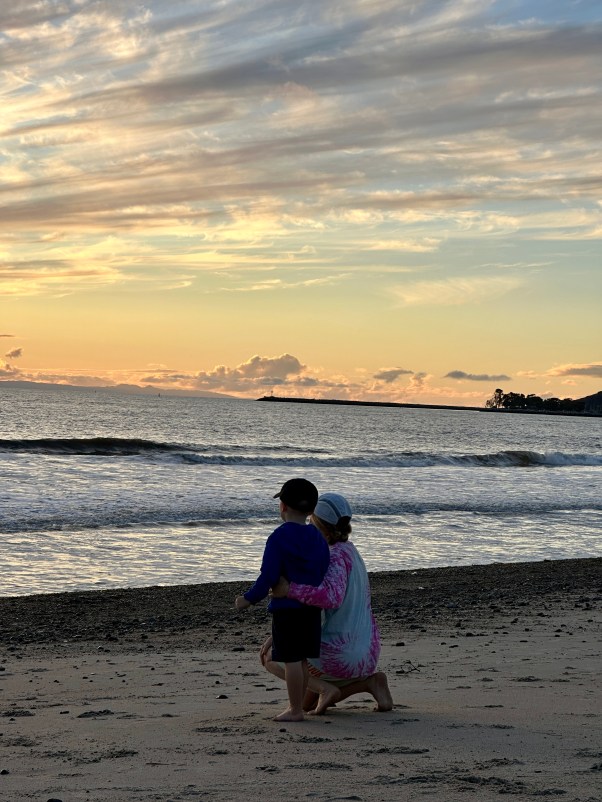
The photos are breath-taking, great captures. The clouds in each are especially dramatic.
LikeLiked by 1 person
Nothing like sunsets ❤️
LikeLike
I love this idea of being a literary citizen. It frames reading not as a pastime or a productivity goal, but as a way of showing up responsibly in the world. What resonates most for me is the sense that reading is relational, a way of testing our present against the past, of loosening beliefs that once felt fixed, of finding both friction and solidarity in other lives.
LikeLiked by 1 person
Thank you for reading and for sharing your thoughts with me. I love that!
LikeLiked by 1 person
Wonderful post! I’d love to attend that event. 👍🏻
LikeLiked by 1 person
Yes! I was thrilled to learn of it and attend myself— a good reminder of the importance of books and authors and citizenship.
LikeLiked by 1 person
What gorgeous photos and such a rich experience. Thank you so much for sharing your wonderful findings and truth!! xxx
LikeLiked by 1 person
Thank you for being such a wonderful support as a reader and a writer!
LikeLike
Hi, This is brilliant application of lessons learned from literature to life. Literature is speculative and skeptical, which might be why certain regimes want to burn certain books or their authors. I applaud your citizenship interest and all the forthcoming bookstore visits.
LikeLiked by 1 person
Thanks for being a reader!
LikeLiked by 1 person
Great blog!
I love to know what people are reading.
I’m re-reading “Loving John” by May Pang. There’s just so much to it, it’s worth several reads. A young woman with an impeccable work ethic at a record company who is told by her employer (Yoko Ono) to have an affair with her husband. It’s a crazy story and shows so many sides to John Lennon.
And in my later years, I’ve taken to reading more slowly, truly absorbing the book.
When I was much younger, I read several books per week. I don’t do that anymore. There’s no contest, just enjoy 🙂
LikeLike
Sounds fascinating– thanks for sharing. And cheers to enjoying books!
LikeLike
I have recently finished a couple of books by Elizabeth Strout. I am a fan of our local library. I deeply appreciate, regularly use, and advocate for the public libraries in every community.
LikeLiked by 1 person
I love the images you included.
LikeLike
You are the second person who recommended Strout— I think it’s time for me to check her out! Yes to public libraries ❤️
LikeLiked by 1 person